
QUICK VERDICT
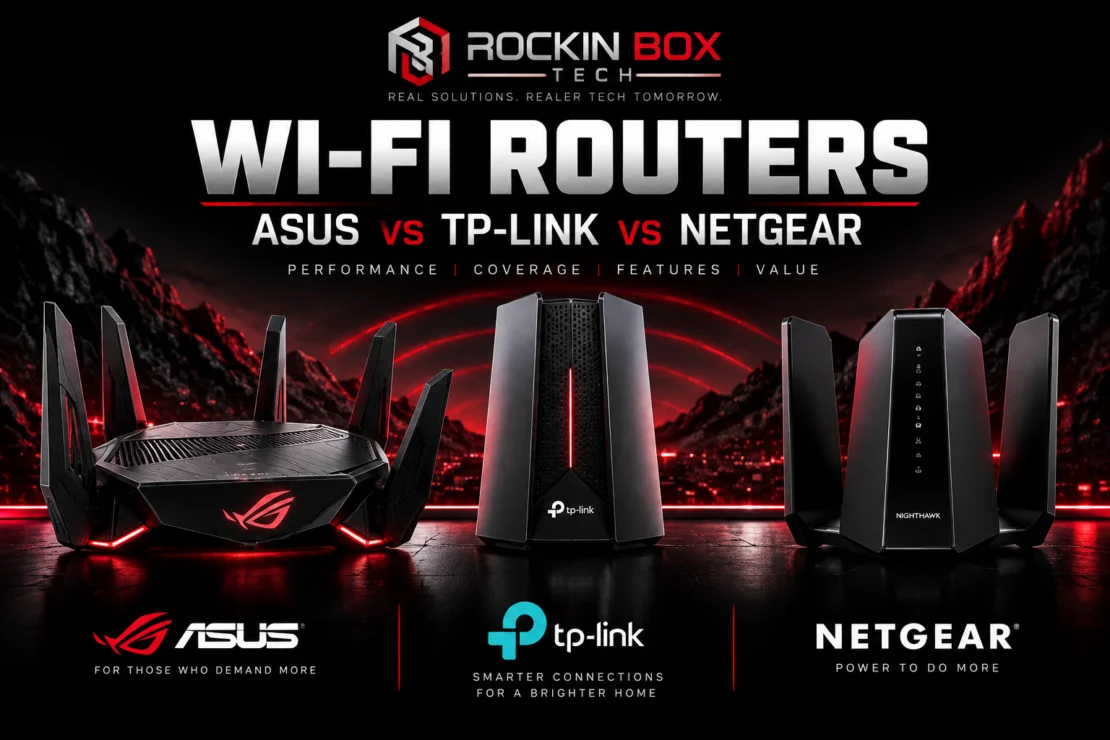
These are three premium Wi-Fi 7 routers, but they are built for different kinds of buyers. ASUS pushes the hardest toward gaming and maximum wireless capability, TP-Link combines strong performance with unusually rich wired connectivity, while NETGEAR delivers a cleaner premium-home design with excellent coverage and simpler positioning.
PRICE RANGE
Prices change frequently by retailer, promotion and availability. Treat these as typical current-market ranges rather than guaranteed selling prices.
SIDE-BY-SIDE COMPARISON
| Feature | ASUS GT-BE98 Pro | TP-Link BE900 | NETGEAR RS700S |
|---|---|---|---|
| Wi-Fi Standard | Wi-Fi 7 | Wi-Fi 7 | Wi-Fi 7 |
| Wireless Class | BE30000 | BE24000 | BE19000 |
| Band Design | Quad-band | Quad-band | Tri-band |
| Advertised Aggregate Speed | Up to roughly 30 Gbps | Up to 24.4 Gbps | Up to 19 Gbps |
| 10-Gig Networking | Two 10Gbps-capable ports | Two 10G ports | 10G WAN + 10G LAN |
| 2.5-Gig Networking | Multiple 2.5Gbps ports | Four 2.5G ports | Not the focus |
| Mesh Expansion | AiMesh | EasyMesh compatible | Extender / ecosystem options |
| Gaming Focus | Excellent | Very Good | Very Good |
| Home Networking Flexibility | Excellent | Excellent | Very Good |
| Design | Aggressive gaming | Premium tower / display | Compact premium tower |
| Best Strength | Extreme gaming performance | Balanced connectivity | Coverage and simplicity |
WHAT EACH ROUTER DOES BEST
ASUS is the most aggressive router here. The GT-BE98 Pro combines a quad-band BE30000 design, dual 6 GHz bands, gaming acceleration tools, AiMesh support and extensive configuration options.
TP-Link gives advanced home users an unusually strong mix of wireless capability and wired expansion. Dual 10G connections, four 2.5G ports, EasyMesh compatibility and a quad-band architecture make it especially versatile.
NETGEAR focuses on strong whole-home performance in a simpler tower design. The RS700S supports up to 19 Gbps of aggregate Wi-Fi 7 capacity, up to 3,500 square feet of advertised coverage and 10-gig wired networking.
PROS & CONS
- PRO: Massive BE30000 wireless capacity
- PRO: Excellent gaming-focused software
- PRO: Quad-band with dual 6 GHz
- PRO: Strong AiMesh flexibility
- CON: Expensive
- CON: Large, aggressive design
- CON: Overkill for many homes
- PRO: Excellent wired connectivity
- PRO: Quad-band Wi-Fi 7
- PRO: Dual 10G plus four 2.5G ports
- PRO: EasyMesh compatible
- CON: Premium price
- CON: Large chassis
- CON: Some advanced users may prefer ASUS software depth
- PRO: Strong advertised coverage
- PRO: 10G WAN and LAN
- PRO: Cleaner physical design
- PRO: Supports very large device counts
- CON: Tri-band rather than quad-band
- CON: Still expensive
- CON: Fewer multi-gig LAN options than TP-Link
WHO SHOULD BUY WHICH?
- You prioritize gaming and low-latency network tuning.
- You want extensive router configuration controls.
- You plan to build an AiMesh network.
- You own high-end multi-gig networking equipment.
- You simply want one of the most powerful enthusiast routers available.
- You want the best overall feature balance.
- You need several 2.5G wired connections.
- You want 10G networking without giving up port flexibility.
- You may expand with EasyMesh later.
- You want premium performance without focusing exclusively on gaming.
- You want premium Wi-Fi 7 with a cleaner design.
- Wide home coverage is especially important.
- You want 10G WAN and 10G LAN connectivity.
- You prefer fewer external antennas and a smaller visual footprint.
- You value straightforward premium-home networking.
BEST ROUTER BY USE
RBT VERDICT
Overall Winner: TP-Link Archer BE900
All three routers are extremely capable, but the Archer BE900 offers the most balanced combination of premium Wi-Fi 7 performance, quad-band capacity, multi-gig wired networking, mesh compatibility and everyday home-network usefulness.
The ASUS GT-BE98 Pro remains the stronger enthusiast and gaming choice, especially for buyers who want deep configuration options and maximum wireless capacity. The NETGEAR RS700S is the better fit for buyers who prioritize strong coverage, a more understated design and straightforward high-end networking.
The right router still depends on your internet speed, home size, wired-network requirements, Wi-Fi 7 device ownership and whether advanced gaming or mesh features actually matter to you.
RESEARCH DISCLOSURE
Rockin Box Tech comparisons are research-driven technical evaluations based on manufacturer specifications, documented product capabilities, current market information and relevant independent technical research. Products are not necessarily physically tested by Rockin Box Tech. Ratings and recommendations reflect our analysis of features, capability, value and intended use rather than laboratory benchmarking. Specifications, pricing, firmware features and availability can change after publication.